Add your promotional text...

The Time to Learn of Others is First Grade
A six year old is a complex thinker. To prepare them academically, they should face elaborate challenges. Letter sounds and word fluency do not meet that criteria.
6/30/20243 min read
My Teacher Got Me!
Mrs. Myers was my teacher in first grade. I really liked her as I recall. I wasn’t interested in reading yet. Two events stood out. The whole class was assigned to color a pre-drawn owl. Mrs. Myers pointed mine out to the class and I assumed it was because I colored within the lines. It also had something to do with using fairly accurate colors from my 64 color Crayola crayon box. Either way, I interpreted the complement as a sign that I could draw. The motivating power of such a commendation started me down a path that eventually provided the confidence that I could achieve.
____________________________________________________________________________________________
The motivating power of such a commendation started me down a path that
eventually provided confidence that I could achieve.
The second memory I have with Mrs. Myers was when only four students were in the classroom. There had been snowfall the night before, but not enough to call off school. However, being the South, most of the parents decided their children would stay home. I do remember the extra attention that came with just four of us there. We probably completed an arts project, where I felt particularly confident, but I just remember really enjoying the day. I, as my mother would attest, always enjoyed extra attention.
When I Discovered I was Old
A few years ago, I walked into a first-grade classroom where I was principal. It was the one hundredth day of school where first graders dressed how they thought they would look at 100. I asked the students why they dressed the way they did, and they answered in chorus that it was the one hundredth day of school! I then replied, “Wow, I wish I had remembered this, and I would have dressed up.” A little girl looked at me sincerely and said, “That’s ok Mr. Bonner, you’re already old.”
________________________________________________________________________________________________
If first graders have been exposed to a variety of experiences, oral reading, and
conversation then inquiry and exploration become intuitive.
If first graders have been exposed to a variety of experiences, oral reading, and conversation then inquiry and exploration become intuitive. The systemic priority on reading in kindergarten means that first graders lose opportunities for inquiry. For the brain of a 6 year to grow toward a cognitive understanding of their world there must remain a part of the day that allows for free play and creative exploration. An academic day that is dominated by reading and math process ignores the aspect of intellectual development that is required to lead to contextual understanding necessary for academic success later in school. Yes, phonemic awareness and decoding skills are important, but so is experience that motivates curiosity, critical thinking, and problem solving. Like kindergartners, a first grade day dominated by practice with work sheets, tablets, and time sitting with a teacher at the small group table can turn into drudgery for a child.
A Tangible Introduction to Community
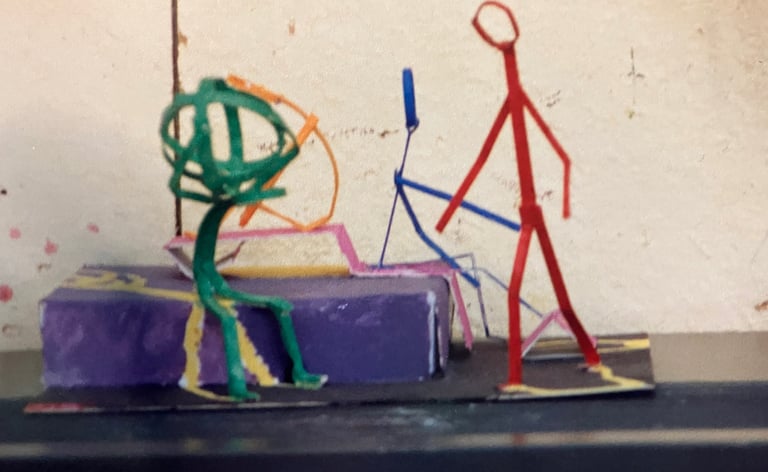
At Providence IB in Huntsville, one of the first units covered involved an exploration of community for our first graders. Part of the work included students going on a walking field trip to the businesses near the school then a creation of architectural models of such things as firehouses, libraries, et al. Students enthusiastically gave tours of the towns they created to parents, staff, and other students.
__________________________________________________________________________________________________
The experience laid the foundation for a broader understanding of human organization.
Our first graders were introduced to their immediate communities while learning about relationships among residents. This activity set the stage for their understanding of their place in the school, their neighborhoods, and the world. The experience laid the foundation for a broader understanding of human organization. Students were encouraged to take ownership of their learning.
_________________________________________________________________________________________________
The motivation of wonder critical for early elementary student learning became diminished.
This activity was contrary to the predominant literacy mandate from school districts and state departments of education where students had little ownership of their learning. The motivation of wonder critical for early elementary student learning became diminished.
Competing Priorities
At the three elementary schools I served as principal, we at the school house did everything we could to encourage experience while trying to serve the requirements of the district. When I saw smiles and positive energy in 6 year olds it was because they were encouraged to explore and inquire through active learning. Students in first grade typically retained a healthy attitude toward school because the academic demands were measured. However, time for student choice or interest was minimal. Less recess, less hands on activity, less time to think. Keeping students busy and prepared for cold reading passages they would encounter in high stakes tests in future years was the order of the day.
________________________________________________________________________________________________
An end that merely focuses on task misses the wonderful possibilities
that exist within the minds of children.
Yes, first graders do need structure, but not at the expense of their natural curiosity. An end that merely focuses on task misses the wonderful possibilities that exist within the minds of children.