Add your promotional text...

My Experience as A Public School Educator
...and what to do about it.
Paul A. Bonner
"I hear and I forget. I see and I remember. I do and I understand." Confucius
I grew up in a life of privilege. The son of an Episcopal priest and a faithful mother fiercely dedicated to her family, I explored my world. Whether tromping through the woods, playing music, playing sports with friends, or developing panoramic paintings, the motivation was to explore life.
Learning the diversity and perspective of others as a student in public schools led to an understanding of advocacy and avocation. Once graduating from Chattanooga High School, I matriculated to the University of the South (Sewanee), a small Episcopal liberal arts college where the breadth of learning directed me to a teaching career.
My social upbringing in the civil rights era, along with the broad intellectual exposure provided by Sewanee, formed an understanding that all human beings learn.
As a young teacher I discovered that all students are born with an innate desire to explore the world around them and manipulate things to make meaning for their lives. I therefore understood my role as a teacher was to bring my students to that perspective.
In 1986, I completed my first master’s in art education at UNC Greensboro and later completed my formal education with a Master of School Administration in 1999. After 17 years as an art teacher and coach I began eight years as a middle school assistant principal and concluded my education career as a principal in elementary and middle schools.
After 38 years as an educator, I find that the purpose of education is to provide an environment for students that motivates curiosity, promotes inquiry, and enhances a vision of the self in the world. I advocate for engaging learning environments centered on student experience that motivate inquiry, interests, and opportunity. My experience in the public schools demonstrates that the best way to do this is through student centered structure that promotes democratic social principles that develop a value for and intellectual pursuits with others.
I am now pursuing a voice to advocate for public education through writing and public speaking. I am currently working on non-fiction and fiction projects meant to illuminate the school environment and the challenges of the 21st century. There is a story about schooling that must be told to describe the critical role public schools have to play in our democracy.


Exploring Education Advocacy
Why This Matters
When I stepped into the classroom as a teacher, I discovered the opportunity that was before my students should I be provided the resources and autonomy to motivate inquiry.
What I Discovered
The centralized organizational model in Public Education that dictates time, curricula, and hierarchical political structure gets in the way of the critical relationship between the teacher, school community and the student.
What I Learned in the School House
My experience as a teacher and school administrator has shown me that the most significant impact on student learning opportunity comes from teaching that is relationship oriented in the vigorous pursuit of knowledge.
What Needs to Happen
It is critical that our communities recommit to public schools. Greater teacher autonomy and instructional support cannot happen through decentralized funding from the private sector. All funding derived from the American taxpayer dedicated to education should go to the school house.
My Purpose
I am here to tell my story about the public school classroom. Not because it is important to me, but to highlight the significance of individual stories for the intellectual, emotional, and social development for anyone who encounters the school house.
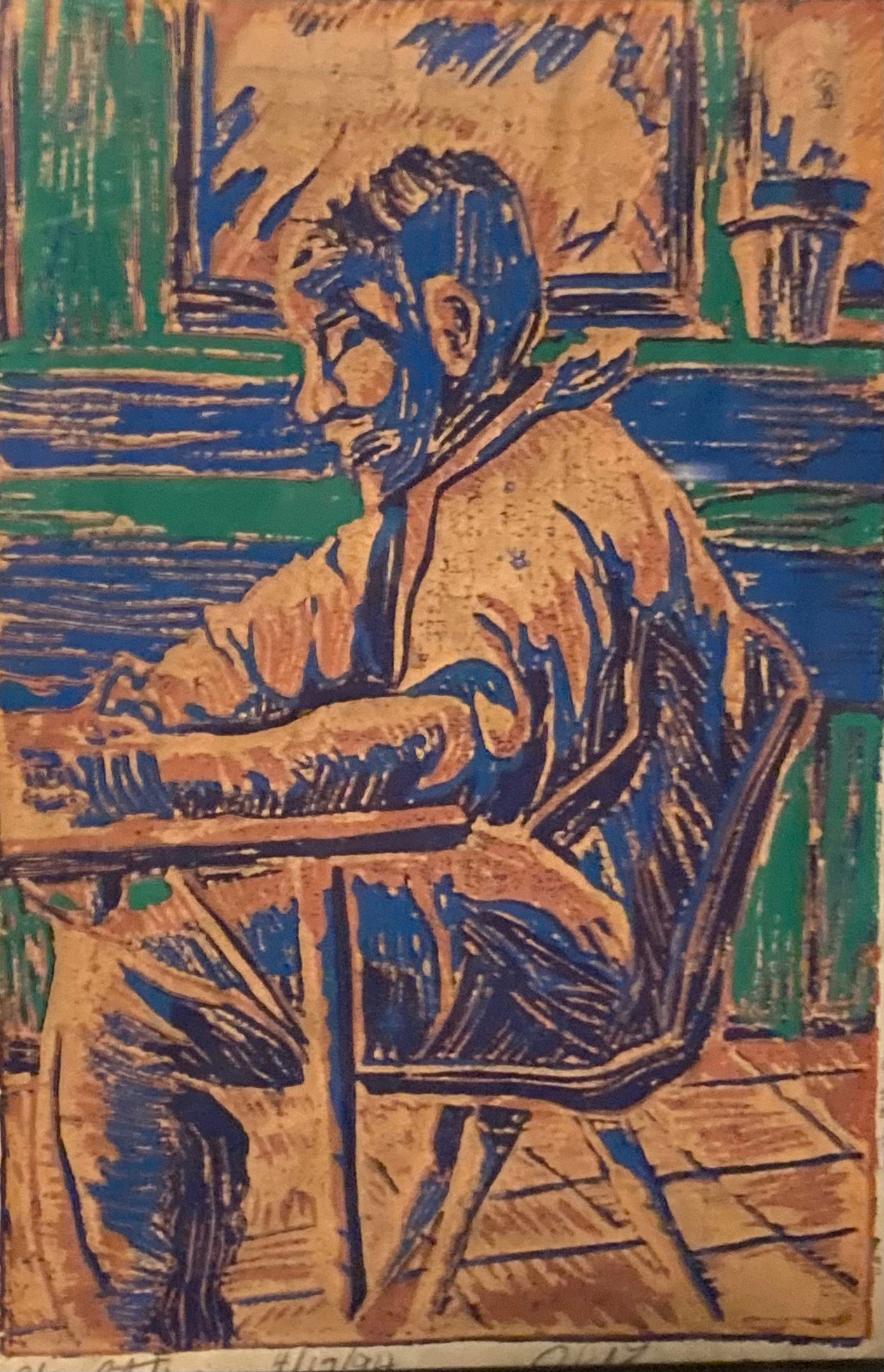
Salt of the Earth
A Novel ©Paul A Bonner 2026
Edison Crane has just completed his master’s degree in creative writing. His father expects him to get over his fantasy to become an author and use his intelligence to maintain the family wealth. His mother wants to protect him from the disappointments of the outside world.
Salt of the Earth is a school year in the life of a wealthy young man who is thrust into the love, hope, and torment of neighborhoods seeking to overcome the barriers created by Edison Crane’s privileged world. He is astonished that despite the demographic combat he is being taught to love and what to value.Through conflict, acceptance, and epiphany, he is surprised by the intelligence and ingenuity displayed by Woodrow Wilson Middle School students in a Park Town community confronted by the interests of the greater city.
I have been working on this novel for a few years now. The editing process has resulted in cuts that give background that explains characters in the story. Below are shorts meant to provide context for the book. These excerpts are no longer in. the text but provide some of the thinking behind its development.
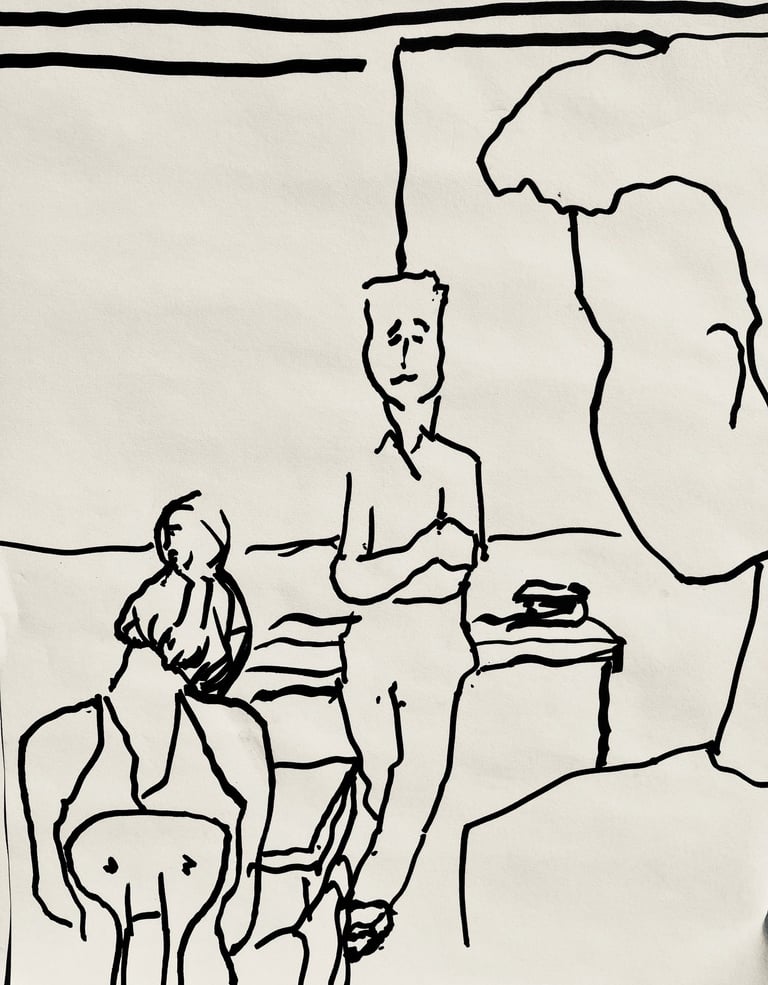
Edison gets a job...
Edison waited anxiously for a call on this Sunday afternoon. He subbed at two high schools the previous week and wanted more work. Suddenly the phone rang.
“Hello Mr. Edison? I’m Carrie Switzer, secretary at Woodrow Wilson Middle School.”
He had not heard of Woodrow Wilson.
“That’s Crane. Edison is m-my first name,” he replied in his typical monotone stammer.
“Oh, I’m sorry. Mr. Crane, I see here that you are signed up to be a substitute for the whole district. Do you have any assignments this coming week?”
“No.”
“We have an English language arts teacher who has been ill and will be out for a few weeks and were wondering if you would be interested in filling that position until she comes back. I was just talking to Mrs. Davis, the administrative assistant at Franklin High, and she said you did a good job at her school last week.”
Carrie had not reached out to Mrs. Davis. Being an astute school secretary, she always looked for unsuspecting substitute candidates unaware of the reputation of Woodrow Wilson. Her goal to fill a teaching vacancy with a warm body usually required deception. Few substitutes who knew of Woodrow Wilson chose to work there.
“W-well…” Edison replied. “Thank you. She didn’t t-tell me that Friday, but it’s good to hear I was satisfactory.”
“We would like you to help us out at Woodrow Wilson. It could become an extended assignment which would help us and keep you gainfully employed.”
Mrs. Switzer had an abrupt, somewhat perky, impersonal speaking cadence.
“Where is W-Woodrow Wilson?”
Mrs. Switzer cleared her throat slightly, “We’re near downtown in the Park Town district near the Bay Bridge. It’s a nice little neighborhood. Working class and all. You know, salt of the earth kinda folk.”
Edison knew little about the communities beyond his exclusive gated neighborhood of Brookshire. The scuttlebutt in his neighborhood was that urbanity was a dangerous place to go. He thought the first week had gone ok at the high school and that this invitation to an extended assignment would mean he could have steady work over the next several weeks. He could then focus on pursuing his writing in the evenings and avoid checking for substitute openings through the district inquiry line. Although physically challenging, standing for hours on end and contending with talkative students, the work hadn’t been intellectually taxing and given his knowledge of the subject, middle school English would be even easier to navigate than high school.
“Thank you for c-calling, Mrs. Switzer. I think I’m interested.”
“Wonderful. May I ask where you live?”
“I live on Elm n-near Greenbriar Street in Brookshire.”
Carrie paused and sighed. Like many substitutes at Woodrow Wilson, she immediately thought that the stammering young man on the other end of the phone would not make it through the school day, much less an extended commitment, but he was the only “yes” she had garnered after five rejections.
“Oh, I know exactly where that is.” Carrie said. “That’s a beautiful neighborhood. You’re about 20 minutes from us. You’ll get on the expressway and head south to the Ironworks Factory exit. You’ll see all the stove pipes and exit there. You’ll take a right on Second Street and will come to Woodrow Wilson about three miles on the left. It’s a big brick building. You can’t miss it. If you could get here about 7:45 and report to the front office, I’ll get you situated before class.” She hesitated for a moment. “This is a sweet little school. We can’t wait to meet you.”
Carrie had a bad premonition about Edison. Some stuttering rich boy from the country club set had little chance with kids in a hard scrabble integrated working class neighborhood. Why would he want to substitute anyway? Woodrow Wilson was desperate. Eighth-grade English class at Woodrow Wilson was renowned for its struggles at the school. Some hapless neophyte would be her only chance to get an adult in the room. The more pressing question was, how would she keep him there?
“Ok, I’ll be there at 7:45. Thank you f-for the work.”
“Uhuh, goodbye!” Carrie hung up abruptly.
Edison was relieved that he didn’t have to worry about work for the next week or so. Why would Carrie tell him that Woodrow Wilson was a sweet school? In his experience, all schools were good places. He attended Windsor Preparatory, a small private school in the western part of the city. Yes, the high schools were more energetic than his private sanctuary, but the students he encountered were still focused on academic success. Why would Woodrow Wilson be any different?
©Paul Bonner 2025
A Mom's Dilemma
“Yo, Peanut!”
Peanut looked back to see Hatty Benson after he walked through the entrance of the local grocery store.
“Oh, where ya been Hatty. I ain’t seen ya at school in a while.”
The two gave a fist bump with a familiar neighborhood handshake.
“Boy!” called Janice Witherman, Peanut’s mother. She forcefully pulled out a grocery cart from the stack just inside the store. “Git over here!” Peanut sheepishly looked at Hatty, lowered his head, and walked hurriedly to catch up with his mother. I told you, ya ain’t to have anythin’ to do with that boy. You got it!”
“Yes’m.”
“I saw that blue hanky hangin’ out o’ his back pocket. I know what that means ya know.”
“Yes’m.”
“You ain’t got nothin’ to do with them gangs do ya?”
“No, ma’am.”
“Don’t ya lie ta me, boy. You ain’t no man and I can still whup ya if I have ta.”
“Yes’m.”
“That’s why I don’t let ya outta my sight when you ain’t in school. I can’t control who ya see in school, but I sure can outside.” Janice walked stridently while pushing her cart. “Git that bread!”
Peanut reached for the bread on the top of the shelf.
“Not that expensive shit, the white bread right there.” She pointed directly in front of Peanut.
“Sorry.”
Janice continued down the aisle, “Boy, ain’t ya got no sense? I swear that Hatty is bad news. I always see him hangin’ out on the corner with other deadbeats. Durin’ the school day!” Her voice got more animated as she talked.
“Yes’m.”
“Git some of them donuts.” She became less agitated.
Peanut nodded and quickly got the bag of powdered donuts. They got to the end of the first aisle where they stopped.
“Janice?” they heard behind them.
Janice turned back and watched as Sylvia Jackson pulled her cart alongside.
“Oh, hello, Sylvia!”
Sylvia looked at Peanut who still had a large multicolored bruise on his forehead given by Dub the previous week. “I ‘m so sorry about your head, Jeffrey. That damned son of mine. You need to stay away from him.”
“I’m okay, ma’am.”
“Like I said last week, Sylvia, it’s ok,” responded Janice. “This boy don’t know when to shut his mouth. I know he had it comin’ to him.”
“That ain’t no reason for Dub to hit him like that,” responded Sylvia. “Your family and my family have been friends a long time. Our boys grew up playin’ together. I don’t like havin’ to apologize, but I’m so embarrassed.”
“Ya got nothin’ to be embarrassed about. They just boys. Mine don’t know how to shut his mouth.”
The three walked down the canned food aisle.
“Peanut, git three cans of those green beans up there. Make that five.”
He obediently got the beans from the shelf.
“Git some of the collards and peas down there.”
“Would you please get some peas for me too, Jeffrey?” asked Sylvia politely.
“Yes’m.”
They continued down the aisle. “What are we gonna do about our boys, Sylvia?”
“Or our men…,” Sylvia stopped as Janice’s facial expression turned dour. “I’m sorry, Janice, I…”
“That’s alright, Sylvia. I keep forgettin’ Jimmy left too, or keep hopin’ he ain’t.”
“No word?”
Janice shook her head. “Some say they saw the police put him in the car, but nobody called. It would be good if I knew he was in jail. At least I would know where he was gone to and that he’d be alright.”
Peanut walked alongside his mother, looking down.
“I’m sorry Jeffrey,” responded Sylvia. “I didn’t mean…”
“That’s ok, Mrs. Jackson.” Peanut’s body language said otherwise. “I know my daddy is gone. I hope he come back.”
“Did ya hear about Henrietta Johnson’s boy?” asked Janice.
“Yes, poor Henrietta, they shot him in cold blood in the back of that abandoned factory. They haven’t arrested anybody yet. Probably gangs.” Sylvia looked longingly at Peanut. “Jeffrey, please stay away from those people. Your momma needs you!”
“I hope ya got the sense to stay away!” retorted Janice.
“He’s a good boy, Janice. Ain’t ya Jeffrey?”
He nodded hesitantly.
“How’s Dub, Sylvia?”
“He’s still home recoverin’ from getting’ hit in the back of the head. It’s an ugly wound. The doctor said his skull got fractured. Dub says it still hurts, but he’s as mean as ever so I can’t tell if he’s better. They gave him an ankle bracelet ya’ know. We’re plannin’ to send him back to school next Monday. Dr. Howard told us to take our time gettin’ him back. Aaron has been watchin’ Dub closer sense we got back from court. Besides, I think Dub’s head hurts too much for him to go out on the street right now. Serves him right too, ya know, Jeffrey?”
Mrs. Witherman nodded pensively.
“We’re tryin’ to find a lawyer. Dub swears that the police version of what happened ain’t true. He said the bag of pot wasn’t what he delivered. He finally told us a little bit about his involvement with the gang but said he ain’t leavin’ it. Aaron said once Dub loses that bracelet, we were gonna look for someplace else to live, to start over. I think this snapped Aaron out of his funk a little bit. He went down to the union office the other day to look for work in another town. Aaron was careful not to mention this to Dub. We don’t want to give him a reason to run off. We’ve been workin’ with Ms. Gerald, the school social worker, to figure out plans to protect Dub. Have you talked to her about your loss, Janice? She’s a good person.”
Janice stopped her cart and pointed toward the cereal boxes on the aisle. “Peanut, git them Cocoa Puffs.”
He quickly complied.
“I tried to call social services after Jimmy disappeared. Ms. Gerald said she would git us together as soon as she could. Lord knows with this town’s troubles; she’s a busy lady an’ the city don’t give a damn enough to send us another un.”
“Keep tryin’ Janice. Ms. Gerald can help.”
“Have ya talked to Dabney or Christian?”
“We talked to Dabney Monday night after the hearing. She tried to talk to Dub, but he didn’t say much. I think his head still hurt. She said she would try to come down next weekend. She did have a good conversation with Aaron. He actually smiled for the first time in weeks. She’s got a new baby ya know? We hadn’t got to see it yet.” Sylvia forced a slight smile.
“Christian?”
“He won’t return our calls. Hasn’t for a couple o’ months now. He and Aaron had a bad argument last summer. I don’t know how his business is goin’ or anything. He was always happy growin’ up and called us a lot before the argument. I’m worried about him.”
They resumed moving down the aisle. “I am sorry, Sylvia. Our men ain’t doin’ too good, are they?”
“Seems that way. I hope our luck changes soon. You and me both had such close families, and our men were doing well at Ironworks. I guess the preacher is right, this is like the Book o’ Job. We ain’t got no control. The one thing is that all this crime and violence has kept me busy at the emergency room. They won’t be lettin’ me go anytime soon.”
“Yeah, and there are plenty of old white folks at the home who need me to change their Depends.”
The two women chuckled.
“Jeffrey, you stay away from all of them bad boys.”
“Yes’m.”
“He just fist bumped one of them bangers when we came in the store!” Janice glared at her son again.
“You’re a good boy Jeffrey. Maybe you could come visit Dub once things settle back down. You too, Janice. It’s been too long since we had a nice family visit.”
As they moved toward the front of the store, Sylvia stopped her cart. “Well, I got to go check out and then check on the men folk. It sure is good seein’ ya, Janice. Let’s get together sometime soon and keep them white folks in that home in line. I know those old white men pay too much attention to a black woman’s ass.”
The two women laugh heartily.
“Lord, it is good ta know ya can still crack on it, Sylvia! We gotta keep laughin.”
Sylvia rolled her cart toward the checkout and got in line. Janice and Peanut headed up the next aisle. His attention became focused on a young girl coming toward them up the aisle. She smiled. He smiled back.
“Ya ain’t old enough for that, boy! She can’t be older than 11. Ya best watch yourself!”
Janice continued to lecture her son as they moved up the aisle while directing him to take items off the shelf. She playfully smacked him on the back of the head and laughed. “I do love you, ya know. Please do right. You’re all I got right now. Pass your classes and keep your nose clean. Please!”
“Okay Momma. I just need ta learn how to keep my mouth shut.”
“Ya got that right! Now get that soap up there on the top shelf.”
“Yes’m.”
Janice had taken Peanut grocery shopping since he was a baby. She gave him a smile and was thankful she could still get him to run errands with her. He’s small now, but he could start to grow into a man at any time. Will he still do what she expected? She doesn’t want to lose her baby.
©Paul Bonner. 2025
Learning the game
“Hey, Edison!”
Robert Connor stepped up to the third bleacher row on the home side of the Woodrow Wilson football field. As he moved toward Edison, he quickly removed his left hand from the board that served as his seat and looked at his hand. He walked a few steps and sat next to Edison. “These bleachers need some work. The wood is splintered and warped. I thought everybody had aluminum stands now.”
“Welcome to Woodrow Wilson.”
Robert looked over his right shoulder seeing Bill Patterson with a sly smile.
“H-hello, Robert. H-hello, Mr. Patterson.” Edison saw Bill Patterson and was surprised that he attended the games. Bill always hustled out of the building to his car as soon as the last bell rang.
“What time does the game start? Oh, he still coaches here?” Robert pointed toward Coach Robertson as he led his team to the home sidelines. “When I played at Haliford Junior, long before it went downhill, Coach Robertson ran a powerhouse here. We used to have intense games. Many of his players went on to Gardner High and some to college. I went to MLK High.”
Edison nodded his head, “I n-never understood football. It stopped and started s-so much that I couldn’t figure out how teams moved down the field. I c-could at least understand when we scored. Y-you cross that line d-down there, right?”
Robert chuckled. “Have you ever played chess?”
Edison nodded.
“Think of football like chess. Each player moves to counter the opposition’s move. The team with the ball is trying to get down the field by hitting the other team to keep them from stopping them. The defense tries to plug the gaps that the offense wants to run through. It’s also kind of like a battlefield. The defense tries to get to the man with the ball by flanking the blockers who are trying to protect the player with the ball.”
“Oh,” Edison looked on the field and saw two players throwing the ball to one another. “So, is that a p-pass?’
“Yes. That’s one way the offense, the team with the ball, flanks the defense by throwing to a player who has gotten past the line of scrimmage.”
“L-line of scrimmage?”
“Yeah. Every play starts with the ball between a parallel line of players facing each other where only the offense can touch, or snap, the ball to start the play.”
“H-how do you snap a ball?”
Robert laughed. “It’s what it’s called when the offensive player in the middle of the line, the position called center, passes the ball between his legs back to the quarterback.”
“Oh, that’s D-Darrel Young snapping the ball over there. He is in m-my honors class. The other students say h-he is very good.” Edison pointed further down the sideline. “That’s Austin Reynolds, another one of m-my students, pounding on another player’s shoulders with his fists.”
Robert nodded his head, “That’s what they do to get fired up. Pound on each other’s shoulder pads.”
“F-fired up?”
“Yeah, it gets them excited. You have to get emotional to want to hit somebody and not be afraid to get hit. Those are two big kids.”
“The violence is what makes football such a great spectator sport, but if you learn about the game, you see how interesting the strategy is.”
Edison was puzzled by the violence in football and why people got so excited about it.
“Hey there, boys!”
Edison and Robert looked to see Sarah climbing up on the bleachers as she moved toward them.
“Be careful, honey. These wooden seats are full of splinters. I’m afraid your pants will get pretty dirty too.”
“What’s a good football game if you don’t get dirty. I grew up playing with my brothers and watching them in high school. I love football games!”
“See, Edison, we’re a match made in heaven,” said Robert.
Edison nodded but did not smile as the referee blew his whistle in midfield. “What are they d-doing now?”
“They’re lining up for the kickoff. A kicker for the defense kicks it to the offense where they try to run it back for a score.”
“Hey, Edison.”
Felicia climbed the bleachers to sit next to him.
“H-hello. Felicia, this is S-Sarah and R-Robert.” All three nodded and smiled. “Felicia is the h-head of our language arts team.”
“And cheerleader sponsor,” she added assertively.
Edison looked out on the field as players lined up facing one another. The referee blew his whistle while a player in the middle kicked the ball. It did not travel very far in the air and bounced up to a player for Haliford who picked it up and immediately dodged a defender. The runner began to run along his sideline where he was hit hard by Darrel.
“Wow! That kid can play.”
“H-how do you know with one play?”
"Your student Darrel just put a big hit on the ball carrier. You can’t do that if you aren’t fast and strong.”
The fans in the stands stood and yelled their approval. Across the field there were a hand full of spectators, including Dub who was sitting conspicuously alone on the top row.
“Why isn’t he sitting over here with Wilson fans?” Edison thought to himself.
“I just hope nobody gets hurt,” said Felicia.
“It’s part of the game,” Robert replied."Kids have to be tough to be good.”
Edison wasn’t quite sure about the attraction. As the game proceeded, he saw numerous plays where the raucous cheers for the hitting troubled him. He never liked loud noise as a child and remained uncomfortable when he confronted it as an adult. Although the crowd was not large, their energy and intensity grew as the score remained close approaching half time.
“Do they have concessions here?” asked Robert.
“Mostly popcorn and sodas,” replied Felecia. “The big dill pickles are popular. I haven’t figured that one out.”
“Edison, let’s be gentlemen and go get the ladies some refreshment,” said Robert enthusiastically. He stood and motioned Edison to do the same.
“No ice please, just soda,” requested Sarah. “It’s too cold for ice.” Sarah slid along the bleacher toward Felicia.
“Be careful, Sarah, those splinters can hurt. How long have you known Edison?”
“About four years. We went to grad school together.”
“Oh, you’re a writer too?”
“Yes, I’m a content editor for the paper. I don’t write as well as Edison. He started teaching because he has trouble with deadlines.”
Felicia nodded and smiled. “He talks about you and Robert often. He’s moving into your house?”
“Yeah, did he tell you why?”
“Something about his dad.”
“His parents are very rich, but extreme introverts who I have rarely heard say a word. His mom is an artist who doesn’t like others to see her work. She is very good, and Edison tries to encourage her to go to a gallery or open a show. His dad is an engineer who has evidently earned some important patents that were used at one time at the Ironworks. He’s now a partner in an equity firm downtown. His patents are still used at the plant that moved to Vietnam. According to Edison, the value of these patents made his family wealthy. His folks don’t understand how Edison would desire to be anything but rich. That’s why they kicked him out of the house when they learned how little teachers make. His dad believes Edison should want to work to earn wealth.”
“Oh!”
“He also has a sister who can be nice but is kind of snooty. I get the impression that they think anyone outside of the Brookshire Country Club is beneath them. His dad thinks he earned his wealth through hard work, and he doesn’t have time for anyone who hasn’t worked hard enough to be rich.”
Felicia looked over to see Robert and Edison in the line. “So, explain Edison.”
“I met him the first time our advisor had us in her office to talk about the creative writing program.”
“Was that Marcy?”
“Yeah, she’s a hoot, and an amazing writer. We all noticed quickly that Edison has a photographic memory, and he intuitively understands anything he reads. His stutter took a little getting used to but once we got over that, his comments during sharing sessions were brilliant. I really started to enjoy his company. At first, I thought maybe I was falling for him, but soon figured out that it was just a good friendship. He was so sensitive, Marcy and I protected him from ruthless competitive elements in the program. He really struggled to get work in on time because he’s a bit of a perfectionist, but his writing was so compelling that professors overlooked his lack of punctuality. Marcy noticed that he was very naive about the world. Once she learned how he devoured books, she started introducing realist authors who wrote brutal and powerful stories. He just hasn’t experienced much outside of his bubble. I think, because of his stutter and shyness, his mother worked hard to shield him from disappointment.”
“He told me he came to Woodrow Wilson because you had recommended that he substitute for some spare cash and that Marcy said the experience would give him things to write about,” said Felicia. “There is literally something that shocks him every day here. He’s never experienced people who are so emotional and aggressive. He hasn’t felt warmth from others like he sees in our kids either.”
“Yeah, he told me about this student, Alleyah, who regularly tells him how much she likes him. She really appreciates what he does. As accomplished as Edison was as a student, no one, not even his parents, praised his talent. He was totally shocked when Dr. Howard kept recruiting him to be full time, telling Edison he made a difference.”
“I guess Dr. Howard got me to take Edison under my wing like you and Marcy. It will be tough. These kids have hard lives and aren’t very patient with adults while the district is becoming more impersonal by the day. Our department had Edison’s first meeting with our assistant principal today, and let’s just say, he isn’t warm and fuzzy like Dr. Howard.”
Sarah pointed beyond the bleachers at the well-dressed older man in a tweed sport coat leaning on the chain linked fence while talking to a woman. “Is that Dr. Howard?”
“Yes, he’s a good man. He believes we teachers can turn this place around, but I don’t think the district agrees. Teachers feel beat up here because we get so much bad press. Dr. Howard is under huge pressure to get better scores on state tests. I hope Edison’s naivete will help protect him from some of the politics.”
“Here ya go, girls!” Robert and Edison returned from concessions as they each handed Sarah and Felicia their drinks and offered to share some popcorn. “Ok, Edison, this brings back memories. We used to have great games against Woodrow Wilson when I played, and I see some similarities. I remember thinking on the sidelines years ago that our team always seemed undisciplined while Coach Robertson’s sideline was always calm and focused.”
“What d-do you mean?”
“Some coaches like to focus on a few plays, especially with young kids, to teach them how to get things right. Robertson’s teams were, and evidently are, big and fast. He wanted his athletes to dominate the opponents. He seems to be doing the same thing here. Those students you point out are the focus. Robertson runs a lot up the middle behind Darrel. Man, that kid hits hard. Haliford is more wide-open.”
“W-wide open?”
“They like to throw the ball. Their best players are the quarterback and their receivers. People like to call them skill players, but as a former football player, the best players on this field today are those two big guys on your team.”
Haliford kicked off to Wilson as the second half began. The score was 7-6, Haliford.
Edison remained confused as little seemed to change. He understood that there was strategy involved and that teams ran and threw, but he did not see how the teams decided what to do against one another. The game continued with no additional scoring into the fourth quarter. The home team fans were getting more anxious as they continuously yelled at referees’ calls. He even heard some grumbling at Coach Robertson. He glanced across the field and Dub was no longer there.
“Throw the damn ball!” yelled Bill Patterson.
Edison was surprised at how animated Bill was at the game when he was so quiet in the school.
“People like Coach Robertson believe in keeping mistakes, like penalties, to a minimum and pounding the other team to the point of exhaustion. It looks like he is moving Austin
to fullback. Right behind the quarterback. I think the coach wants to give him the ball to run over Haliford. Remember what I said about chess, you counter the other players and try to guess what they are going to do next.”
Felicia and Sarah were fascinated watching Edison try to comprehend what Robert was telling him. They were not so sure, through Edison’s facial expressions, that he liked the violent hits. Especially not the ones that were right in front of the stands.
On the next play Austin got the ball and charged through the line for a first down.
“H-how did you know they were going to do this?”
“I have watched and played a lot of football. Great game, huh?”
Edison was not so sure. The Wilson quarterback continued to turn around and give Austin the ball with the same result. Finally, with a minute left, Austin charged through from the five-yard line and scored. The crowd cheered.
“That w-was successful. Why d-didn’t they do that earlier?”
“Coach wanted to wear their opponent down. Haliford has been tackling well the entire game. The more you hit them hard, the less they can respond later in the game out of fatigue. This was an old-fashioned football game.”
“Old f-fashioned?”
“Yeah, slobber knocker football! I love it.”
“Slobber kn-knocker?”
The women laughed at Robert’s enthusiasm.
“They hit hard the whole game. A lot of sore players tomorrow.”
Edison remained confused about the enthusiasm for a game where players expected pain. There was excitement from the parents, staff, and students over the win. He noticed Hooter Kinsey and Wanda Merchant leaning on the chain link fence behind the home team. They did not appear to be paying much attention to the game.
"You won the title!”
“M-me?”
“Your school. Thanks for inviting me to come to the game. Maybe when you move in, we can watch a game on TV.”
“M-maybe.” Edison conveyed an awkward look.
Again, the girls laughed at the interaction.
“Now, Robert, give Edison time to appreciate football,” said Sarah.
The four of them stood as Edison watched the players greet one another at the middle of the field. Austin looked over their way and grinned. Edison smiled back.
Coach Robertson walked toward the fence where Edison and Robert were standing. “Thanks for coming out, Edison, and for bringing some friends. The kids noticed.”
Robert walked up to the fence and reached over to shake Coach Robertson’s hands. “Thanks, Coach. I played in this game for Haliford a few years back. I’m Robert Connor. I played quarterback.”
“I remember you. You were a fine quarterback. You used to give us fits.”
“I know I always hurt the day after the game.”
Coach Robertson laughed and then turned to gather his players.
“Fine man and quite a coach. I wonder why he never went to coach high school?”
“I think he loves his kids here too much,” replied Felecia.
Edison looked at Felicia and then at Sarah, “I d-didn’t know people cared so much.”
“See you Saturday, Edison?” asked Sarah.
Edison nodded. “Mother says I can have the b-bed, dresser, and my old d-desk. I need to f-figure out how to get it to your place. I didn’t tell her it was your place.”
“You can use my truck,” responded Robert. “I have some time Saturday, so I can help.”
Sarah is pleased that her athletic boyfriend and cerebral friend hit it off. She also noticed how comfortable Edison was with Felecia and how interested she seemed in him. “Ok, Saturday then!”
“S-Saturday.”
© Paul Bonner 2025
Dr. Howard Takes a Risk
“Thanks for coming to dinner tonight,” stated Dr. Howard as he smiled. “I wanted to talk to you two away from campus.”
Edison and Felecia slid into the back booth with him at Harry’s.
“Why hello!” bellowed Harry Simpson, the proprietor, as he approached the three at the booth. “This is a pleasant surprise. This ain’t Wednesday, is it? I know I’ve been workin’ hard, but...”
Dr. Howard chuckled, “Hey, Harry, just thought I’d treat two of my superstar teachers for their good work. I’m going to introduce them to the best steaks around since they rarely eat anything but your wings and burgers.”
“Well, that’s awfully nice, Dr. Howard. I’ll get Janesia over here to take your order.”
“That’s great, Harry.”
“So why are we here, Marshall?” asked Felecia abruptly. “You don’t usually buy your teachers’ dinner.”
“Now you know our last meal here at Harry’s at the end of the year is nice, and I take care of that.”
“You know that’s not what I mean. Is something wrong?”
“Why would you think that?”
“Yesterday was the shortest staff meeting I’ve ever experienced at Wilson, and you didn’t smile once.”
“That obvious?”
“Uh huh.”
Dr. Howard gave a serious expression as he looked at the two before him.
“The oppression of high stakes testing, among other things, has arrived in Park Town.”
“What d-do you mean?” Edison had always lived in a bubble that was void of social or political context. His hyper focus on his classes as a student had kept him unaware of the community and establishment factors that drove the prosperity or struggles of a school. Given the socio-economic status of the Park Town community, Woodrow Wilson had almost no power to drive its destiny as a viable institution. He understood the inner workings of machinery, but not social forces that propelled human endeavor.
“I have something very serious we need to talk about.”
“This doesn’t sound good. What’s wrong, Marshall?”
“I don’t make a habit of sharing personnel matters among staff members, but what I’m about to say will not be pleasant. Alex is a mole for the superintendent, Dr. Porter. She is so sure of her authority with the school board and business community that she barely even tries to conceal Alex’s purpose. I am going to share a great deal of management perspective here, so we need to keep this confidential. Dr. Porter has employed a common trick of large district superintendents and has provided our union rep an office near hers. I have seen some of my colleagues, even those with impeccable reputations, resign unexpectedly while Dr. Porter brings in new principals who are either young or loyal. I just had a very disturbing meeting with Dr. Porter and a former colleague, Dr. Chandler, who I surmise through this meeting has been forced to carry out Dr. Porter’s agenda. You two are among the few I now trust.”
“Why are you telling us this?” asked Felecia.
“Hello, strangers!” Janeshia Carlton walked up to the occupied booth. “What’s the special occasion? Harry says you want to order his legendary steaks.”
“We certainly do! How are you doing Janeshia? Three t-bones, please.” Dr. Howard looked at Felecia and Edison. “How do you like your steak cooked? Would you like a salad and potato with that? Janeshia make all three medium.”
Both nodded.
“What about drinks?” asked Janeshia.
“I’ll have your house Cabernet. I’m sure Edison will have the local red lager,” responded Felicia.
“Ordering for Edison already. You two must be serious.”
Edison blushed and Felecia smiled.
“I’ll have a double bourbon, please, Miss Janeshia.” Dr. Howard handed the menus to the waitress.
“I’ll be back with your drinks shortly.”
“Where was I? Oh, right. We need to be aware of what we say even here. Janeshia is a great gal, but she has deep roots in Park Town and word travels fast.”
“Give us the bad news, Marshall.”
“In my meeting with Dr. Porter Tuesday, she revealed that she was aware of Edison and his resistance to Alex’ directives regarding reading.”
“Wow! We’re in a district of fifty thousand kids and she is concerned about a new language arts teacher? Micromanagement anyone?”
“What d-did she say about me?”
“She’s concerned that you’re not licensed as a teacher. She blames that part on me. Hiring you that is.”
“We didn’t have a teacher, and no one wanted the job. Does she know that?!”
“We must be quiet about this, Felecia. I did explain to Dr. Porter that I had no candidates at the time Edison began to substitute. I told her I was pleased with what I saw and went through channels to see if I could hire him on an emergency contract. That didn’t change her attitude. She told me she had high standards, and I should too.”
“Does she know Edison has an English degree and a masters?”
“She didn’t seem to care. Evidently Alex reported him as insubordinate over the conversation we had about reading and test prep at school before Christmas. Alex told Dr. Porter that Edison taught the reading anyway against his directives.”
“That’s not true!”
“What I was careful not to reveal in my rebuttal was that it was you who argued with Alex the most adamantly. I can only assume Alex didn’t include you in his report because Edison, being probationary, is an easy way for him to get Edison non-renewed and Dr. Porter to claim the scalp in her effort to show high standards.”
“Yeah, I have tenure anyway.”
“I’m not sure that’s the protection it used to be. Dr. Porter made it clear that she would pursue my release if I didn’t fall in line. She also has been filled in about the outlying gang activity and Edison’s role in reporting Dub and Hooter to the police. I shouldn’t be telling you this, but she wrote me up for not telling her about our work together on this over Thanksgiving.”
“Man! What are you…”
Edison uncharacteristically put his hand on Felecia’s arm to stop her thought. “What d-does this mean for me, D-Dr. Porter?”
“She also told me she knew about your support for Coby’s mom.”
“So is Alex reporting to Dr. Porter daily?”
“That’s what it looks like. Alex came to the district with Dr. Porter. A fellow principal pulled me aside and warned me when it was announced Alex would work for me.”
“He’s pretty young to be so chummy with a veteran superintendent.”
“Some of the school leadership graduate programs have made it a practice to recommend loyalists to district leaders who want to clean house. That’s probably how he got this gig. Anyway, because of the incident with Coby’s mom, Dr. Porter directed me to write Edison up by Friday.”
Edison was confused.
Felecia sat up straight and then threw herself back against the booth looking toward the ceiling.
Janeshia arrived with the drinks and, after seeing Felicia, asked, “Is everything okay?”
“We’re fine, Janeshia.”
Janeshia distributed the drinks. “The steaks should be ready in about ten minutes. Do you need anything else?”
“How about some of those nice rolls?” Marshall asked.
“What was I thinking? Of course.”
“We need to be careful. There’s a lot going on with this superintendent and I have a feeling it might relate to the construction at Ironworks.”
“So, they want to fire Edison?”
“You have to calm down. We can’t have this conversation if you keep getting excited.” Dr. Howard had admired Felecia since she first got to Woodrow Wilson, and he learned early that she did not hesitate to speak her mind on anything she was passionate about. Understanding her youthful exuberance, he worked to soften her approach to colleagues, and this allowed her to gain stature among her teaching peers.
“They w-want to fire me?”
“I have written the letter with help from a lawyer friend to make it look like a form of documentation, without threatening your employment. I’m not sure how Dr. Porter will respond to the letter, but she’s smart enough to understand my intention and will probably try to reject the letter or seek to write a second letter herself. Top-down superintendents like to add write-ups as justification for termination. My lawyer told me that I would need to tell her I have hired him and that should get her to back off, but it will only make her more determined to punish you.”
“Why m-me? What h-have I done to her?”
“She’s a power bitch, Edison. All that matters is that she displays a toughness to the board and public. She’ll bring down schools with this tactic too.”
“B-but what have I done?”
“You’ve done nothing wrong,” responded Dr. Howard assuredly.
“She w-wants me fired. D-doesn’t that mean I am not doing my job?”
Felecia rubbed his arm. “The world can be a brutal place. I’m learning that this is especially true with schools.” Felecia looked at Dr. Howard. “What do we need to do?”
“I don’t know. I’m not very crafty when it comes to people who have bad intentions. I’ve never had to be before.”
Janesia arrived with the rolls and Harry followed behind her with the steaks. “Janesia tells me you have some serious faces over here. Is something wrong with the service?”
“Certainly not, Harry. You know Janesia is our favorite. We’re just planning some work with our students. Everything’s okay,” replied Dr. Howard.
Harry placed the tray of food on a stand while Janesia served the rolls. She then reached back to the tray and began to place the entre before her customers without saying a word. She commented, “Bon appetit! Do I need to freshen your drinks?”
“I think we’re good, Janesia. Thanks.”
“I don’t think I’m hungry,” said Felecia.
“You two have got to eat to avoid suspicion. We’ll figure all of this out.”
“We will?”
“D-do I need to do those practice tests all the time now?”
“No, the kids will rebel. You keep doing what you’re doing. I thought we had reached a compromise with Alex, but that obviously isn’t true. I am going to start talking to superintendents in nearby districts to see if there is some opportunity for me and, if you allow it, I would like to take you two with me.” Dr. Howard cut a piece of his steak and put it in his mouth.
“What about Woodrow Wilson? They depend on you.”
Dr. Howard finished chewing and looked directly at Felecia. “I have done all I can do. My attorney told me I would probably want to resign at the end of the year and, since I don’t want to retire yet, I should start looking for another school outside the district. Dr. Porter is going to kill Woodrow Wilson whether I fight this or not. I think the new school that is going up at Ironworks is going to replace Wilson. I think she will close us or Haliford or both. She’ll give the school a new name to avoid failed status from the state. She’ll be outta the district before the new school gets under state cross hairs.”
“I j-just don’t understand.”
“You’re a bright young man who finds himself in a vicious political place. My job now is to get you two to a good place. Believe it or not, good schools still exist.”
“I think W-wilson is a great school!”
“You’re right! We can’t talk about this to others though. I have a feeling next week’s combined county commission/school board meeting will give us a better idea about the fate of the school.”
“What about our families?”
“I don’t know, but I’m worried.”
“S-salt of the earth.”
“You’re right Edison.”
“That gets washed away,” said Felicia.
The three resumed eating quietly.
“You’re r-right, Dr. Howard, this steak is the b-best I’ve ever had.”
“Even better than that country club of yours, huh, Edison.”
Edison nodded and put another bite in his mouth.
© Paul A Bonner 2025
Coby the Gamer and Dad the Drunk
“Phew, phew, phew!”
Coby enthusiastically held his controller as he fired his lasers toward intended targets imitating the sound effects coming from the flat screen before him in his bedroom. The room was dark while the images on the screen lit up with bright reds, oranges, blues, and yellows creating the image of existential warfare.
“Look out, Roy,” Coby called into his microphone. He was connected online with his virtual video partner as they fought their opponents.
“Shit!” yelled Roy.
“Roy, ya gotta pay attention. Clamor is sneaky. He and Domotron are champions in this game for a reason. What do ya got? Two lives left?”
“Yeah.”
“Watch the incoming transporters. These two are known for riding in and surprising their enemy from the sky. Wait, up on the rubble to the left there’s movement. That’s him, Domotron.”
Roy fired. “Got him! Fuckin’ ay!”
“Good shot. Keep an eye out for Clamor. They’ll make a sacrifice to draw you out.”
“You sum’bitch!” Roy looked out to the right of his screen and saw a hover craft that looked like a motorcycle barreling toward him.
“Phew, phew,” Roy made his gun sounds as he fired toward the intruder. “Boooooom!”
“Great shot Coby!” called Roy.
“This should get us to the next level,” stated Coby.
“The highest we’ve been yet!”
“We have to keep an eye out. This looks like we are climbing an abandoned office building. Some of the walls are blown out, and if we get too close to the edge, we could expose ourselves to fire from the boys.”
“Watch the stairs.”
“We need to go up, not down,” Coby ordered.
“We’ve never been on this level before. How do you know?”
“Ya don’t want to be below your enemy. Look out!”
Roy fired up the stairwell and took out two cyber warriors. “That was close. Where do you think Clamor and Domotron are hiding?”
“If I know them, they have a couple of cruise ships they’re bringing down on us at some point. Give up some of your points for more fire power.”
“Got it! What do I need to bring down a cruise ship?” asked Roy.
“80-millimeter thermo-blasters should do the trick.” Suddenly Coby heard an unfamiliar deep sound, like a heavy explosion in the distance. “What was that!?”
“What?”
“That heavy blast sound in the distance. Sounded like something big.”
“I didn’t hear anything. Didn’t see a flash anywhere on the screen either.”
“There it is again.” Coby stopped shooting with his controller. “Hold it! That’s not coming from the game. Roy, I need to leave the game for a bit. Pause it and let the other guys know I’ll be right back.”
“Is everything ok? We’re on a serious roll here.”
“I think so. If I’m not back in a half hour, I may need to pick it up tomorrow.”
“Man, we have a good chance to get in that tournament if we do well tonight. Are you sure you have ta go?”
“Yeah, I need to check on my mom.”
“Wait! How old are you man? Are you legal?”
“Yeah, I told you I’m nineteen,” Coby replied. “I’m home while taking a break from college.” Coby, although small in stature, had a deep voice for a thirteen-year-old. He used it to deceive online gamers.
“Okay, remember they have strict rules against underage participation in these money-making tournaments. You’re good, but we could get banned in the future if you lie about your age and I would lose my credentials too.”
“I promise, I’m legit.” Coby was once again distracted by a thud beyond his headphones. “I gotta go. I’ll catch up later.” Coby pulled off his headphones and heard Veronica Black, his mother, down the hall of his house.
“You can’t be here! I have a restraining order. I really don’t want to call the police. You don’t need more trouble.”
“I just want to see Coby,” replied Carson Taylor, Coby’s dad, through an alcohol induced slurring of his words.
Coby walked over to the door with the room still dark. He put his right ear up against his door.
“No, Carson! You can’t go down the hall. I’ll call the police, I promise!”
Carson, barely able to stand, stumbled toward Coby’s room. He did not have a history of violence with Veronica, but he was much larger than she was, so she did not attempt to stop him in his inebriated state.
Carson got his restraining order because it was revealed in custody proceedings that he tried to take Coby away from Veronica without her consent. The judge said that she could charge Carson with kidnapping but instead took Carson’s right to visit his son.
Coby heard his father’s unsteady steps coming toward him down the hallway. He quickly stepped out into the hall. “Hey, Dad!”
Carson stopped and staggered about ten feet from Coby. “Hello, son. I miss you. Are you doing the remote video gamer thing?”
“Yeah, I’m playing right now. Do you want to watch?”
“Coby!” declared Veronic following Carson. “We talked about this.”
“Shut up, bitch!” replied Carson as he glared at Veronica.
Veronica stepped back.
Coby looked at his mother and put out his hand to signal he could get Carson under control. “C’mon in, Dad. We’re about to qualify for a tournament that has a cash prize.”
Veronica gave Coby a stern look. Veronica had worked hard to keep Carson in Coby’s life, but Carson was not dependable, and he often took Coby to the neighborhood bar and tried to profit from Coby’s talent gambling on video games. Once Carson was able to sneak Coby into the reservation casino in the next county, but Veronica caught him when Coby brought home a thousand dollars in winnings. That was the first time the judge put restrictions on Carson’s visitation requiring supervised visits. She also made sure Coby didn’t keep the money.
Carson was a highly regarded welder at Ironworks but often got in trouble at local drinking establishments. This resulted in him getting laid off right before the plant closed. Carson then had a car accident that cost him his right eye. Veronica filed for separation because she was worried about Carson’s poor decision making around Coby. She still loved Carson and had not yet filed for divorce. The judge took the restrictive steps because police had intervened during Carson’s escapades. Veronica never filed complaints.
Carson started to step toward Coby’s room and turned back toward Veronica, “I’m sorry Babe, I just want to see my boy. I’ll behave, I promise.”
Coby looked at Veronica again and nodded his head as if saying he understood and would keep Carson in check. They walked into the bedroom and closed the door. Veronica stood in the hallway worried about what might happen. She was concerned that Carson might be desperate and take drastic action to get Coby.
Coby pointed to the large flat screen on his wall with a frozen dystopian gaming landscape. “This is what we’re playin’ Dad. My virtual partner is Roy, and we need to get to one more level to qualify for the tournament. They think I’m nineteen. It’s the only way I can play.”
Carson moved to Coby’s bed and smiled. “Boy, ya gotta a gift. You could make a killing if you get with the right folks. I’m proud of you.” The father wasn’t concerned with son’s lying. His influence on the boy had been that of a risk-taker willing to cheat if it gave him an advantage. Coby thought it was all cool, but he worried that his dad could get in big trouble and did not understand how someone good with his hands could not get a good paying job. Carson often claimed the excuse that blacks had the advantage over the white men with better talent.
Coby picked up his headphones with the microphone, “Hey, Roy, I’m back. Do Clamor and Domotron want to keep playing?”
“I think so. They said they’d give us 30 minutes. Is everything ok?”
“Yeah, my dad just came to watch.”
“Man, I hope you’re really nineteen. These gamers don’t like it if you break the rules.”
“Don’t worry, I’m nineteen.” Coby looked at Carson from his swivel padded office chair in front of the screen. Carson winked and smiled.
“Look out Roy. I think that’s Domotron’s cruiser up there to the right. I’ll fire a flare to get his attention, then you broadside him with your thermo-blaster. Remember, you could only afford two shots, and you only have one life left. If you hit him, that could get us to the tournament.”
“Got it!”
Coby shot his flare over the cruiser and then fired off a quick round from his gun to draw attention away from Roy. Roy quickly fired his first round that hit the cruiser broadside.
“Ya hah!” Roy shouted as Coby cringed from the shout running through his headphones.
“Great shot, Roy! We’re in!”
Coby glanced over toward his bed and saw Carson passed out, sprawled over the comforter. Coby frowned and shook his head. He quickly refocused on the game. As the fighters moved up the stairs of the skyscraper’s ruins, a bright flash appeared on the screen followed by “Kaboom!”
“Coby, are you hit?”
“Yeah, they hit me square, but I still have two lives left. They sent me back down but I’m okay. You stay under cover until I work my way back. If we both get up there, you’ll get a life back.”
Coby had been diagnosed with attention deficit disorder and had a prescription to counter his lack of focus. He refused to take his meds when going to school but used them when playing video games. He believed this gave him an edge. Taking the drug at night cost him sleep, but the consequences of dropping off in class didn’t bother him while losing video games did. At the bottom of the virtual stairs just below Roy, Coby peered out over the apocalyptic landscape on screen to find possible marauders wishing to do him harm.
“Roy, do you see anything moving from your perch up there. Look to your right.”
“Nah, no movement.”
“I saw something briefly on the top of the building across from ours. Shoot into that building to see if you draw anything out.”
Roy strafed the brick along the top of the building façade and then stopped. Coby saw movement above.
“Did ya see that? It looks like some kinda flying craft.”
Roy strafed once more and suddenly a cannonade of tracers was seen by Coby as they blasted above him where he assumed Roy was hidden. Coby quickly fired a round toward the top of the other building and watched as the roof collapsed from the blast. The flying craft was now exposed, and Coby used his regular rounds to shoot down the ship which crashed below.
“Woohoo!” cried Coby into his mic. “That had to be Clamor. We’ve dropped him three times now. He might be done. Roy, are you ok?”
“Yeah. I was deep enough into this floor that their rounds couldn’t reach me.”
“Great! I’m comin’ up.” Coby quickly moved his fighter up the stairs where he saw Roy’s. “We’re in!”
“Do you want to keep goin’?”
“Nah,” Coby looked over to his sleeping father. “My Dad needs some help with somethin’.”
Roy wasn’t convinced that he was communicating with an adult father-son relationship, but Coby had a sixth sense as a gamer and could be the ticket for Roy’s success. “Ok, we’ll pick up tomorrow. I’ll check with the monitors to see what they need for us to finalize tournament arrangements. You’re good, Coby, I just hope you aren’t pullin’ my chain with this age thing.”
“I’m not. I promise. I’ll catch up with you tomorrow night around ten.”
Coby looked back toward Carson as he pulled off his headphones and mic. He rolled his office chair away from the screen and converted his gaming device to a streaming channel he had hacked days before. Coby had become very confident in his ability to navigate the cyber world without having to pay for services. He found a TV show to watch and leaned back in his chair with his hands behind his head.
Bam, bam, bam!
Coby jumped from his chair and looked over to the bedroom door.
“Mr. Taylor! This is Officer Jamison. You need to let me in.”
Coby looked back at Carson who remained unconscious, then looked back at the door. He remained silent and heard conversation from the other side of the door.
“What’s your son’s name, ma’am?”
“Coby.”
“Coby, this is Officer Jamison. You need to let us in, son.”
Coby wondered if us only referred to the officer and Mom, or if there was another officer in the hallway.
“Coby!” called Veronica. “You need to let us in. Unlock the door or I’ll allow the police to kick it in.”
Coby got out of his chair and slowly walked toward the door.
“Coby, do you hear us? Your Mom says I can force myself in to insure you’re ok.”
“Ok! I’m coming to the door.” Coby stopped briefly and looked down at Carson who remained motionless.
Coby turned the doorknob. He stepped into the hall hoping he could delay officers entering his room. Officer Jamison walked past Coby into the bedroom, quickly followed by another officer.
“Mr. Taylor!” Jamison said loudly.
The Officer turned back toward the door where Veronica stood.
“He’s passed out, Miss. I could smell the liquor as soon as I stepped into the room.”
Officer Jamison motioned to the other officer. “Grab him under the right arm. I’ll get him under the left.” As they lifted, Carson finally began to stir.
“Stop! He hasn’t done nothin’!”
“Boy, you don’t want to interfere with police business. Your dad here just ignored a court order to stay away from you and your mom. We need to take him in.”
“But…”
“He shouldn’t be here, son. He knows that. That’s what the judge told him, and I suspect your mom here tried to warn him when he got in the house.”
“Mom!”
“The officer’s right, Coby. I tried to get your dad to leave, and being drunk like he is I couldn’t wait to see if he would become violent or worse, get you out of the house.”
“He loves us, Mom. There’s no way he would hurt us. He hasn’t before.”
Carson began to get his bearings and stood on his own feet as the police put his arms behind him to be cuffed. “What’s this?”
“You’re under arrest Mr. Taylor for violating your court order.”
“Veronica? You called the police on me?” Carson looked directly at Veronica visibly perplexed.
“Damned bitch!” Carson said under his breath.
“Mr. Taylor, this is on you,” replied Officer Jamison.
Carson looked up. “They won’t let me see my boy, officer! I just wanted to see Coby.” Carson began to cry as he looked at Coby’s tearful expression.
“Let’s go!” The two officers began to forcefully escort Carson toward the front door. “Ya know, the judge may not let you out any time soon after this stunt.”
Veronica and Coby followed the three and stopped at the front porch as they watched Carson get put in the car.
“Ma’am you may want to get in touch with your lawyer to see what the judge decides to do.” Officer Jamison looked in the yard where Carson left his car. “This could warrant another DUI that could result in even more time in jail. Judges don’t mess around with violated restraining orders.”
The police officers got in their patrol car and drove off as Carson hung his head in the back seat.
Coby glared at his mother. He then stormed into the house.
Veronica heard Coby’s bedroom door slam. She walked over to the porch swing and sat down hard. Her current emotional state prevented her feeling the fall chill in the air. As the patrol car pulled down the street, she began to sob.
©Paul Bonner 2025
Change of the Guard
It was an unusually warm and sunny for a February Sunday. There was a furious energy on the Wilson Park basketball court with Woodrow Wilson boys trying to prove themselves against Gardner High students. This was a rite of passage annually undertaken by members of the Wilson basketball team. Although this was Crip territory, gang members encouraged the more acceptable element of the school to build their skills for later high school glory. The high schoolers who could not cut it in varsity hoops typically joined the gang later and carried on the tradition of challenging younger neighbors by balling ferociously to toughen the team members up. It was an unspoken rule that school ballers stayed out of gangs to avoid trouble for college. The Crips believed it their responsibility to keep the future hardwood stars safe. If Bloods or other outsiders threatened their boys, this would be grounds for a street fight.
The drive-by shooting that resulted in the death of one crip and the severe wounding of Time had brought about a temporary truce between the Bloods and Crips who considered the Koreans a common threat. The razing of Drake Heights took a significant part of Blood territory away and many of that gang had gone underground. Still, gangs stayed in their neighborhoods and remained unwilling to share their real estate. Despite the temporary truce, the Crips continued to keep their distance from their Park Town rivals.
“Well ,well…” stated Stick Man Newton, sitting at Time’s accustomed bench beside the court, “Looky what we have here. Y’all been quiet the last couple o’ weeks.”
“Hey Stick,” replied Dub solemnly as he and Hooter approached along the perimeter of the court. “How’s Time?”
“He’s gonna make it, but I don’t think he’ll be out here for a while. Y’all ain’t gonna be stupid and try and do somethin’ again, is ya?”
“We feel like we’re responsible, breakin’ up the store and all.”
As was typical, Hooter stood quietly to Dub’s side. He still wanted out of the gang although he had not told anyone recently, including his best friend. The usual crowd was hanging out at the park. Unlike Hatton Square, Wilson Park remained in decent shape. Enough families around the park, including the Jacksons, were determined to maintain the working middle class feel to the neighborhood. There were enough parents like the Jacksons and Withermans who refused to cede ground to gangs during the day. Many surrounding homes remained well kept, even though the economic stressors made this difficult. Younger children played at the park away from the basketball court while parents hung out to make sure acknowledged gang members did not corrupt their babies. Gang leaders did not have a problem with this because it gave them some respectability in the greater community. Even the police tended to show deference often arresting and harassing Bloods in greater numbers.
Dub stood and watched the kids playing on the swing.
“What ya thinkin’, Dub?” asked Stick.
Dub shook his head. He had enjoyed his Sunday meals with Christian and wondered if his earlier thoughts on the power of being a Crip were right. He would never share this with anyone, but seeing his brother’s prosperity compared to the struggles of older gang members had begun to get into his head. He did not regret his choices to this point, but he had become attracted to Christian’s lifestyle and did not know if gang power could get him there. Donny Carter’s death and Time’s absence had created a conflict in Dub’s reasoning.
“Ya know y’all did a stupid thing, right?” asked Stick.
“What ya mean? Time told me he was proud of what we did. Right before the shooting he told Hoot to buck up and keep the pressure on the Chinamen.”
“It was careless. Time was reckless. We don’t need no reason ta stir things up with Chinks while the white man is tryin’ ta take this place from us.”
“How ya figure?” asked Hooter.
“Have ya been ta Ironworks lately? Somebody’s fuckin’ that place up big time.” Stick looked out over the court. “They tore up The Store and machines are puttin’ stuff up all over the place. They already took Drake from the Bloods because they was stupid, and now they’re gettin’ into our territory. I seen cops and all sorts of security around the old factory twenty-four-seven. I ain’t seen nothin happen ta that China store ‘cept that people came and cleaned it up for ‘em. They’re sellin’ stuff again. The white man wants ta run us out now that we tried to run out the Chinese. You two started all of this when ya decided ta be enforcers. I told Time he was puttin’ too much inta you youngin’s heads. We didn’t used ta let newbies do anything but deliver. When Time decided to blow smoke up yer mother fuckin’ ass, he just brought all this on us. The Chinamen got the last shot an’ we can’t do nothin’ ta get even if we want ta keep Park Town. Y’all’s gonna stand down now. No fightin’ the Chinamen at Wilson.”
“But the factory was bein’ torn down before we busted up the store,” responded Dub.
“Don’t matter. We are gonna get it back by bein’ smart. No more killin’ until these families around us can show people from downtown that we know how ta take care o’ the neighborhood. It’ll happen, but it will take a while. I’m in charge now. Time ain’t.”
Dub and Hooter gave surprised looks.
“If ya do anythin’ ta fuck this up, we’ll fuck you up.”
Hooter looked up and saw the Crip approaching who had the long gun in the store at the shooting. He was not wearing the normal pants below his waist with colors hanging out of the pocket. He had a pressed collared shirt tucked into khaki slacks.
“What’s up?”
Dub and Hooter looked over the stranger suspiciously.
“This is the new look boys,” commented Stick. “We’re gonna fool these white boys, apply for jobs to work on their project, and then take back the store. You watch, it’s gonna work. Time’s way is done. It’s our time.”
“Cool,” replied Dub.
After the regular trips to town, Dub sensed Stick’s plan would not work. He figured his anger had to be more strategic, but he knew after his encounters with Gordon Juvenile, that these white folk had a firm hand on Park Town. Like Christian told him, succeeding in this world requires knowing how to play the game. The white man’s business is more powerful than any gang. He is beginning to understand this as a young man while seeing his gang superiors miss the point. Park Town is about to change.
Hooter turned and gave a clueless look. Dub knew his friend did not understand the conversation at all.
“I just want out of this mess. I just want to have a job like my dad had before ending up on disability. I don’t know how to leave the gang, but that’s what I want.”
“Ya know that ain’t happenin’ don’t ya, boy?” asked Stick.
“C’mon, Hoot. We’re gonna lay low until Stick tells us what to do.”
“We’ll still need ta keep our business goin’. So, you two will have ta come here ta get deliveries on Tuesday’s and Thursdays. That cop that thinks he’s so cool. Tommy, I think, is his name. Only comes ta play ball on Wednesdays and Fridays. You two need ta be somewhere else on those days. No guns or fightin’ with the Chinese. We’re gonna be smart this time.”
Dub led Hooter toward the playground. He saw Peanut’s mom standing by the swings, so they quickly pivoted to the other end of the park. Like he told Peanut, Mrs. Witherman scared them. The two walked out of the park across the street to the parking lot at Woodrow Wilson and started to walk toward the Jackson house.
“What the fuck was that about?” asked Hooter.
“We got a new boss, at least until Time heals up." said Dub. "We’ll get even, but on our terms. Stick don’t know what’s up in Park Town.”
“What ya mean?”
“We ain’t gonna be here very long and Stick and his bros don’t have no place ta go. I will, though.”
“What about me?”
“Me and Time will take care of ya. And don’t worry, these white folk ain’t gonna let the Chinese stay around either. Ya want ta see if Christian could take both of us ta dinner tonight?”
“Sure.”
“If he does, I doubt he’ll get us steak this time, but he will tell us about what is goin’ on. That’s how we get what we want. Stick ain’t gotta a clue.”
The two walked down Dub’s street and got to his house. They started to walk up the stairs to the porch. Hooter could not understand how the Jacksons kept their house together. His dad’s infirmity and his mother’s working at two different fast-food restaurants meant their house was often unkept. He and his little brother tried to help, but they could only fry baloney and eggs. Things were not good at his house like they seemed to be at Dub's.
As they reached the front porch, they looked over to see Aaron Jackson rocking on the glider up against the living room window.
“What’s up, boys?”
“Nothin’ much, Dad.”
“Christian called. He’s on his way. Hoot do ya want ta stay for dinner?”
“I’m gonna ask Christian if Hoot can come with us.”
“If ya can’t, you're welcome ta eat with us. How’s yer dad?”
“He’s ok, kinda.”
“Life ain’t been too good to yer pop. Help him make it better.”
“Yes, sir.”
Dub pulled back the screen door as he and Hooter entered the house. Aaron looked out over the street, leaned back in the glider, and began to swing.
Contact Information for paulabonnerwrites
Please feel free to reach out for more information about my fiction and non fiction projects, public education advocacy. I look forward to connecting with you.
pbonner759@gmail.com