Add your promotional text...

It Wasn't Busing that Failed
A couple of weeks ago I listened to a podcast conversation between Tim Miller of the Bulwark, a Republican ex-pat, and John Heilemann, a regular on MSNOW. They brought up busing in Boston in the 1970s where Heilemann identified it as a failed policy that did more harm to African Americans. Wrong culprit.
5/19/20263 min read
A Misrepresentation
A couple of weeks ago I listened to a podcast conversation between Tim Miller of the Bulwark, a Republican ex-pat, and John Heilemann, a regular on MSNOW. They brought up busing in Boston in the 1970s where Heilman identified it as a failed policy that did more harm to African Americans. This description of busing stuck in my craw.
__________________________________________________________________
In 1974, busing began when I was in eighth grade in Chattanooga, Tennessee
As many know, the country finally had a breakthrough on Civil Rights when the Supreme Court overturned the infamous “separate but equal” principle of the Plessy vs. Ferguson case of 1896 with the Brown Vs. Board of Education ruling in 1954 (archives.gov). As the 1950s moved into the 1960s, many states, particularly in the South, decided to drag their feet to avoid complying with the Court or simply chose to ignore the ruling altogether.
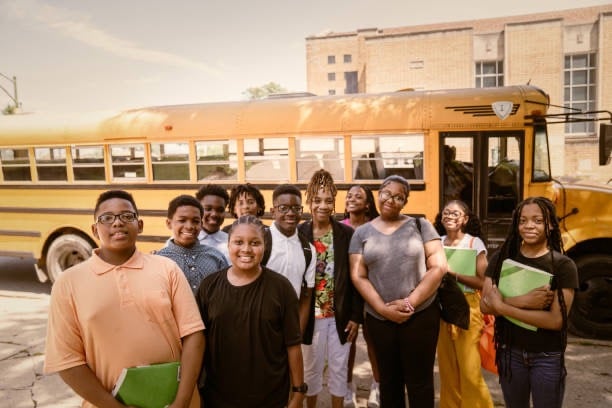
The courts, along with civil rights leaders across the South, sought ways to integrate schools and in the Swann vs. Charlotte-Mecklenburg Board of Education ruling, busing became the remedy. In 1974, busing began when I was in eighth grade in Chattanooga, Tennessee. Over the next four and one half years, my high school became 50% Black and White.
We thought This Was a Good Thing
Many of us were idealistic about the social progress. In our 1976 yearbook, our editor wrote “Our school is integrated and personally it is the greatest thing that has happened to this school.” We were proud of the progress and potential. It didn’t hold us back. Many in my Senior class went on to prominent colleges and universities while my African American classmates received greater opportunities.
_________________________________________________________________
We found it ironic that a Northern city like Boston struggled more
than we did in the South.
I recall watching the unrest over busing in Boston in 1975. In school, we talked about the fact that we experienced little of this in Chattanooga. We found it ironic that a Northern city like Boston struggled more than we did in the South.
Busing Worked Until Some Decided It Didn’t
In 1982, I became a teacher in Charlotte. At the time, almost all schools were 60% white and 40% Black. In Mecklenburg County, this meant that Black students now had access to resources they did not have while the district was segregated. It meant more opportunity. Schools remained desegregated until 2002, and achievement improved for all students (What Led to Desegregation Busing-And Did It Work? History.com. Leslie Kennedy July 09, 2019 {May 28, 2025).
________________________________________________________________
The problem with busing wasn’t that it did not work, it was because
Americans did not want to participate.
Heilemann’s contention that busing was a failure for African Americans is misleading. A 2011 study out of the University of California at Berkeley found that educational and occupational achievement increased significantly for African Americans with desegregation (History.com). The problem with busing wasn’t that it did not work, it was because Americans did not want to participate. It is estimated that only 5% of the nation’s public school students participated in a busing for desegregation district (History.Com).
The Forces that Stopped Progress
As the courts and our politics became more conservative while moving away from the advances of the Civil Rights era, there was less political appetite to force integration. In 2002, there were fewer than 20 Title One high poverty schools in Charlotte. After an opponent of the Swann decision ruled the district was unified as a federal judge in Charlotte -Mecklenburg. the district contemplated a “choice plan”. Today there are over 100 Title One schools in a re-segregated district. School funding has not improved with the demand such poverty requires and therefore, we are back to a discriminating system with unequal opportunity.
________________________________________________________________
What we have learned over the past 10 years is that there remains a
significant part of our society that does not want diversity.
The irony of Brown V. Board is that those Black plaintiffs wanted to attend schools near their neighborhoods. When communities resisted, the courts, civic leaders, and politicians determined busing to be a temporary measure as other segments of society accepted multiculturalism. What we have learned over the past 10 years is that there remains a significant part of our society that does not want diversity. The ideals pursued in Brown V. Board remain unrealized because too many are unwilling to do the work required. This was not because busing was bad policy, but due to a racist legacy that is worried that diversity for equality just might improve prosperity for all.
Where the media get it wrong, particularly liberals like John Heilleman, is they equate failure of result to bad policy or even the failure of progressive practice. The problem regarding busing in the public schools was more a result of poor community cohesion and fear than misguided policy. Too many did not want it to work.
©Paul A. Bonner
2026